
Online continuing education for psychologists is sometimes pre-recorded and sometimes live, and licensing boards don’t always count them the same way.
This guide covers how each format works, what each costs in money and time, how boards treat them differently, and how to match one to your situation. We offer both, so nothing here is built to push you toward one.
Key Takeaways
- On-demand courses are pre-recorded and self-paced. Live webinars are scheduled sessions held in real time on Zoom, with direct access to the instructor.
- Boards often classify the two differently. Recorded coursework is usually self-study, and some states cap how many self-study hours count per cycle.
- Live interactive online hours are generally not capped the way recorded hours are.
- A course from a provider your board doesn’t recognize won’t count either way.
- The right answer is often both: clear category requirements on demand, and use live webinars for topics worth discussing in real time.
On-Demand Courses vs. Live Webinars: 2 Ways to Earn CE Credits Online
An on-demand course is pre-recorded: you buy it, watch it in your own time, and finish whenever you finish. A live webinar runs on a set date at a set hour, led by an instructor in real time. We run ours on Zoom.
In-person seminars still exist, but they’re not terribly popular anymore because of the time and travel requirements. We don’t currently offer in-person training.
Terms like "interactive," "self-paced," "home study" and "video-based" get used loosely in course marketing, which is a problem when boards attach consequences to the distinction. NBCC draws the line where most boards do: a webinar counts as a live event when participants can interact with the presenter, while on-demand webinars and other recorded materials fall under home study. The certificate label is what your board reads.
On-Demand Courses vs. Live Webinars at a Glance
| Factor | On-Demand Course | Live Webinar |
|---|---|---|
| Scheduling | Start, pause and resume anytime | Fixed date and time |
| Location | Anywhere with an internet connection | Anywhere with an internet connection, via Zoom |
| Pace | Self-directed, in segments under 30 minutes | Instructor-paced, in real time |
| Interaction | Self-guided, with a quiz after each lesson | Real-time Q&A with the instructor |
| Materials | Video lessons plus handouts to view, print or download | Presenter slides and handouts to reference later |
| How boards may classify it | Often self-study or home study | Often live or interactive, varies by board |
| Best for | Busy caseloads, tight deadlines, category requirements | Real-time discussion, accountability, new skill areas |
How Online Continuing Education for Psychologists Works
Clinicians who have mostly earned credits in a room with other people often aren’t sure what online CE involves. Here is the process, at least how we do it.

Enrolling and Accessing a Course
Create a free account, browse by topic or credit category, and buy the course at checkout. Registration takes a few minutes, and you get confirmation and access details right away.
Before you buy, check three things: the credit hours, whether the provider is approved for your board, and which category the course satisfies, such as law and ethics.
Taking an On-Demand Course
Our on-demand classes are edited video versions of live classes, so you see the presenter and the slides rather than a voiceover and a slide deck. Each is broken into segments under 30 minutes, which is what makes it possible to come and go between sessions. Handouts from the original live class are available to view, print or download.
A short quiz follows each lesson before you move to the next one, and a course evaluation comes at the end. You need 75% or higher to pass, with up to three attempts. After two unsuccessful attempts, our office resets the quiz so you can take it once more.
Joining a Live Webinar
Register for a scheduled session, then join live on Zoom from your computer, tablet or phone. A clinician presents in real time, you can ask questions directly, and you keep the slides and handouts. You must attend the full session to earn the credit. Six-credit classes run 9:00 am to 4:00 pm Pacific, three-credit classes 10:00 am to 1:15 pm.
Getting Your Certificate and Keeping Records
For on-demand courses, your certificate is available immediately once you pass the quiz and complete the evaluation, and it stays in your account with the class and handouts. For live webinars, you receive your Certificate of Attendance after submitting the evaluation at the end of the session.
Check that the certificate carries what your board will ask for in an audit. Texas, for example, requires certificates to show the licensee’s name, the course dates, total hours earned, and an indication of the topics covered. Keep them for as long as your board requires.
The Case for On-Demand Courses
Self-paced continuing education in psychology fits around a caseload instead of competing with it. There’s no fixed schedule, no need to protect a block of time, and no pressure to finish in one sitting. There’s also no time limit to complete our classes, and access doesn’t expire: the class, the handouts and the certificate stay in your account permanently, which is nice when a particular topic becomes especially relevant to a client two years later.
The trade-off is that nobody is waiting for you. There’s no live discussion, no one to ask a follow-up question in the moment, and finishing takes self-discipline. Short segments and a quiz after each lesson help, since you’re never more than 30 minutes from a stopping point.
The Case for Live Webinars
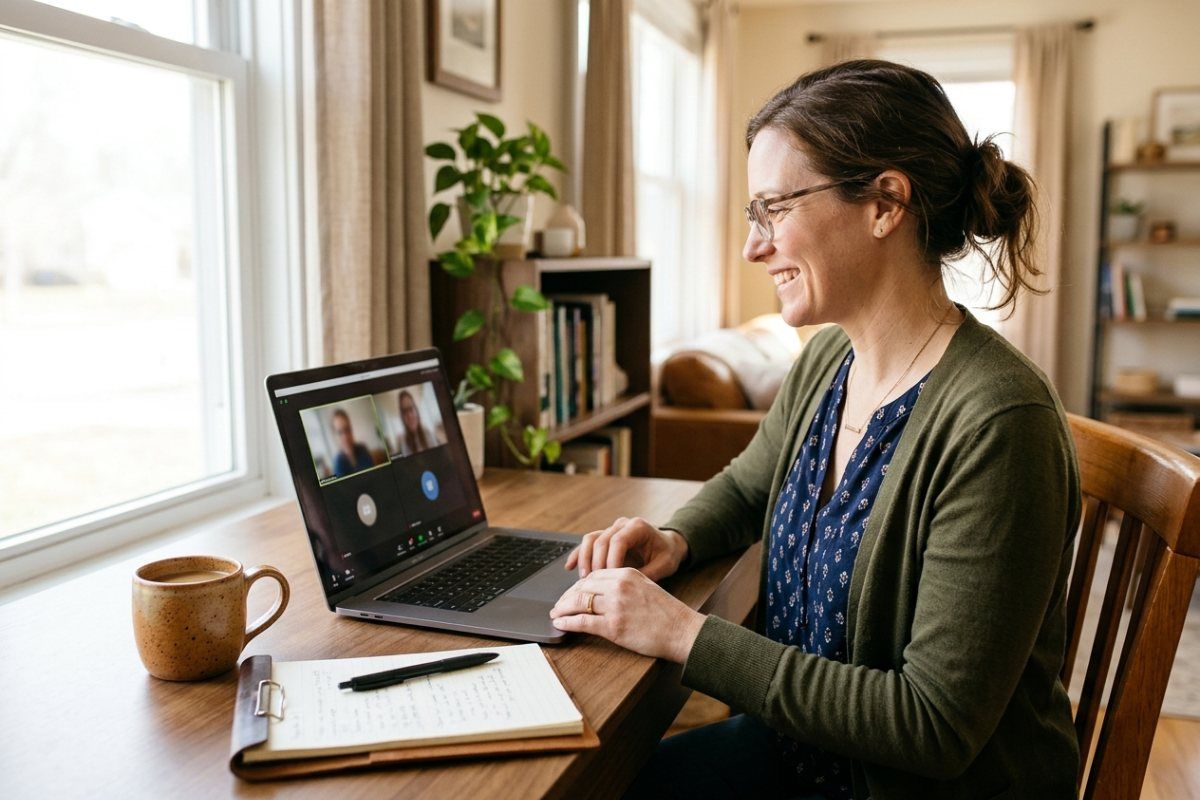
Live CE webinars for therapists and psychologists buy something recorded content can’t: the instructor, in real time, answering your question about your case. A scheduled session also creates accountability. It’s on the calendar, so it happens.
There’s a regulatory argument too. Some boards limit recorded hours but not live interactive ones. New York, for instance, caps self-study at 12 hours of a psychologist’s 36 per three-year registration period, while placing no limit on online hours that include live interaction with the instructor.
Do Both Formats Count Toward Your License Renewal?
Generally yes, when the provider is approved. It varies, though: Texas defines "self-study" as informal learning with no provider involved, so if you receive a certificate, they say it isn’t self-study at all. New York uses the term for any recorded course without live interaction.
California takes a third approach. The Board of Psychology’s continuing professional development framework states there is no live requirement for sponsored continuing education, though sponsored CE caps at 27 of the 36 hours per renewal period and licensees must draw from at least two of four activity categories.
Approval status still matters more than format. We offer APA- and ASWB-approved CE, but you should confirm the provider is accepted by your own board and that the certificate matches the category you need. Our ethics CE guide covers how category labels work. Requirements change, and your licensing board is the final authority.
What Each Format Costs
Both online formats remove travel, lodging and meals, so the real comparison is the fee plus the time. A live webinar needs a protected block at a fixed hour, which may mean moving clients. An on-demand course fits the gaps you already have. Providers of online CE courses for psychologists price per course, in bundles, by membership, or on unlimited plans, so compare what you’ll use rather than the headline number.

| Cost factor | On-demand course | Live webinar |
|---|---|---|
| Course or registration fee | Varies by provider and pricing model | Varies by provider and session length |
| Travel, lodging and meals | None | None |
| Time away from practice | Fits into gaps between sessions | A fixed block at the scheduled hour |
| Lost billable hours | Minimal, since no sessions need moving | Possible if the webinar falls during client hours |
| Rescheduling flexibility | Start anytime | Limited to the set date and time |
Run the math on your own rate. A clinician billing $150 a session who moves three sessions for a three-hour webinar gives up $450 on top of the fee. Still far less than a full day plus travel for an in-person event elsewhere, but it belongs in the comparison.
Matching the Format to Your Situation
The on-demand vs live CE question usually resolves itself once you name your situation. Solo practitioner with no free weekday blocks: on demand. Deadline in three weeks: on demand, because it can start tonight. Learns by asking questions and needs a scheduled commitment: live webinar. Moving into a new clinical area where real-time discussion with an expert is worth the calendar hit: live webinar.
A one-minute version: unpredictable schedule, go on demand. Retain more from discussion than video, go live. Deadline close, go on demand. Board caps self-study, go live for the balance. Often the answer is both.
Building a Blended CE Plan Across Your Renewal Cycle
Split the cycle deliberately. Clear the required categories on demand early, where you control the timing: law and ethics, and for California psychologists the cultural diversity and social justice hours, covered in our California cultural competency guide. Confirm the current hour counts with your board, since these change.
Then reserve live webinars for the second half: deeper clinical topics, real-time discussion, and any live or interactive hours your board requires.
Quality Checks Before You Enroll in Any CE Course
Before you pay, confirm five things: clear board approvals and provider numbers, how and when you receive your certificate, what the completion requirements are, the refund and access policies, and whether you can reach a human if something breaks. On approvals, check at the source. ASWB notes that most states accept its ACE approval but New York does not, so national accreditation doesn’t settle the question everywhere.
Reachable support is worth testing before you need it. You can call us Monday through Friday, 10:00 am to 4:00 pm Pacific, and a person answers. Our contact page has the details. Beyond that, judge the platform itself, video quality, whether it works on your devices, and the faculty’s credentials.
Why Practitioners Keep Coming Back to PsychSem
Ken Bachrach, Ph.D., founded PsychSem in 1996 after sitting through a CE class that leaned on anecdotes instead of research. The standard he set still runs the catalog: integrate theory, research and practice, and recruit faculty worth listening to for six hours. More than 30,000 mental health professionals have trained with us since.
The same standard applies to both formats, so switching between them isn’t a trade-off in quality. Browse the on-demand library or the live schedule and pick whichever fits the month you’re having.
Conclusion
Both formats satisfy renewal when the provider is approved for your license. The choice comes down to your schedule, how you learn, your budget, and what your board does with self-study hours.
Check your board’s current rules, then browse our on-demand courses or live webinars and confirm the approval for your license.
FAQs
Can I mix on-demand courses and live webinars in the same renewal cycle?
Yes, and most clinicians do. The thing to watch is whether your board caps self-study or home study hours, because that limits how much of your total can come from recorded coursework.
How quickly do I receive my certificate after completing an online CE course?
For our on-demand courses, immediately after you pass the quiz and complete the evaluation. For live webinars, you receive your Certificate of Attendance once you’ve attended the full session and submitted the evaluation. Other providers vary, so check before enrolling if timing is tight.
What should I do if I’m close to my renewal deadline and still short on credits?
Start with on-demand courses, since they begin immediately and don’t depend on a scheduled date. Check your required categories first, then fill the remaining hours. If your board caps self-study, you may still need live hours, so check the webinar calendar too.
What Counts Toward Cultural Diversity & Social Justice CE?
The Board lets you meet the 4 hours through any combination of the four CPD categories: Professional Activities, Academic, Sponsored Continuing Education, and Board Certification. It doesn't require a specific course format. You do have to note on your documentation which activities you're counting toward the requirement.
Specific topic still matters, though. All CPD must be pertinent to the practice of psychology, so a diversity workshop built for corporate teams may not qualify.
Keep your records. The Board runs random audits, and the state's CPD regulation requires you to keep proof of compliance for four years from the effective date of your renewal.
Online, Live, and Self-Paced Options
| Format | Best For | Key Consideration |
|---|---|---|
| On-demand course | Psychologists needing maximum scheduling flexibility | Confirm course-specific credit and completion requirements |
| Live webinar | Professionals wanting interaction and real-time instruction | Must meet attendance/completion requirements |
| Other eligible CPD activity | Psychologists building a broader CPD plan | Verify that the activity fits the Board's rules |
California's CPD framework has no general live-course requirement for sponsored continuing education. All hours can be obtained through on-demand courses (home study), live interactive courses (in person or via live webinar), or a combination of the two formats.
What Should a High-Quality Cultural Competency CE Course Teach?
A strong course improves how you work with clients whose identities, backgrounds, or social contexts differ from yours. We build our courses to integrate theory, research, and practice, a fair standard for any provider. Before you buy, look for three elements.
Self-Awareness and Bias
Look for training that asks you to examine your own assumptions, identities, cultural position, and potential biases. Unexamined assumptions shape your intake questions, assessment, rapport, and treatment decisions. Treat bias work as an ongoing skill, not a one-time achievement.
Culturally Responsive Clinical Practice
The best courses teach concrete skills: culturally responsive assessment, case conceptualization, treatment planning, communication, and adapting interventions. Dr. Pamela Hays' course is one example: her ADDRESSING framework addresses intersecting cultural influences, and the course provides tools for culturally responsive practice and repairing identity-related microaggressions. Prioritize techniques you can use in your next session.
Communication, Microaggressions, and Repair
Cultural competence includes knowing what to do after a misstep. Even careful clinicians misread a cultural cue sometimes. What matters is whether you notice and repair the rupture without losing rapport.
Lambers Fisher's course covers this directly: reducing cultural offenses, cultural self-awareness, diversity language, microaggressions, and relationship repair. At the organizational level, the federal National CLAS Standards set similar expectations for communication across language and culture.

How to Choose the Right Cultural Competency CE Course
| Selection Factor | What to Look For | Red Flag |
|---|---|---|
| Board relevance | Explicit connection to California psychology practice | Vague "diversity" language with no clinical relevance |
| Credit | Clearly stated CE/CPD hours | Unclear credit information |
| Instructor expertise | Qualified clinician/subject-matter expert | No meaningful instructor credentials |
| Clinical application | Cases, tools, strategies, examples | Primarily theoretical content |
| Format | Matches your schedule and learning preferences | Completion requirements are unclear |
| Documentation | Certificate/proof of completion | No clear record-keeping process |
Most diversity continuing education for therapists is marketed to every license type at once, so start with board relevance. Some providers call it CDEI continuing education; the course description tells you more than the label.
Verify course acceptance and current requirements with your licensing board rather than relying on any provider's marketing, ours included.
We offer live and on-demand formats. See our upcoming live webinars, or browse our on-demand CE courses by topic.
Cultural Competency CE Courses for California Psychologists
Match the course to what you want to improve.
Culturally Responsive Practice: Pamela Hays, Ph.D.
This 4-hour on-demand course is our most direct answer to the requirement. We identify Culturally Responsive Practice as meeting the 4 hours of cultural diversity/social justice CE required of licensed California psychologists each renewal period.
Dr. Hays built the course around her ADDRESSING framework for intersectional cultural influences. You'll create a Personal Strengths Inventory that draws on culturally based strengths, learn to avoid and repair identity-related microaggressions, and leave with practical clinical tools. If you want all 4 hours in one self-paced course, start here.
Diversity Made Simple: Lambers Fisher
Lambers Fisher, MS, LMFT, MDiv, takes a shame-free approach centered on cultural self-awareness, culturally sensitive communication, reducing unintentional offenses, and repairing relationships. Diversity Made Simple is a 6-credit on-demand course that we identify as meeting the 4-hour California requirement.
Fisher is a licensed marriage and family therapist and author of Diversity in Clinical Practice. Choose this course if you want to strengthen the conversation itself: what to say, what to avoid, and how to recover.
Additional Multicultural Learning Options
For a social justice lens, Barbara C. Wallace, Ph.D., a Teachers College, Columbia University professor, teaches Do You Really Know Me?, a 6-credit course that also meets the California requirement. It covers how people learn automatic responses to difference and how dialogue, self-observation, and brief motivational interviewing can change them. Browse our on-demand catalog for more.
Cultural Competency CE Should Improve Clinical Practice (Not Just Check a Box)
Four hours meets the requirement. Good training changes how you understand clients and make decisions. It shows up in intake questions, in a diagnostic formulation that separates cultural norms from symptoms, and in treatment goals the client recognizes as their own. It also shapes how you read family dynamics, when you refer, and how you interpret behavior that looks unusual from your vantage point.
Ken Bachrach, Ph.D., founded the company in 1996 because the CE he was taking felt like a time-wasting checkbox. Our courses integrate theory, research, and practice so the hours carry into your work.
How to Build Cultural Diversity CE Into Your California Renewal Plan
Start With the Mandatory 8 Hours
Identify the two topic minimums first: 4 hours of laws and ethics and 4 hours of cultural diversity and social justice CE. Both count toward the 36-hour total. Schedule them early instead of leaving them for the end of your cycle.
Fill the Remaining CPD Hours Strategically
Choose the rest of your hours based on your clinical population, your specialty, the areas where you want to grow, and your professional goals. Keep the category rules in mind. Unless ABPP board certification awarded during the cycle covers all 36 hours, you need hours from at least two of the four CPD categories, and sponsored continuing education caps at 27 hours per renewal period.
Keep a running CPD log instead of reconstructing the hours you’ve spent, later. Our guide to psychologist continuing education covers broader planning.
Common Mistakes Psychologists Make With Cultural Diversity CE
- Assuming every diversity course counts. It has to apply to psychological practice, come through an eligible CPD category, and leave you with documentation.
- Confusing Board of Psychology and BBS rules. Colleagues licensed as LCSWs, LMFTs, or LPCCs follow the Board of Behavioral Sciences, which sets different requirements.
- Waiting until renewal is close. Last-minute choices lead to poor fit, limited availability, and incomplete paperwork.
- Picking a course only for its 4 hours. Clinical relevance and instructor expertise matter too.
- Losing records. Keep CPD records for at least four years.
Conclusion
California psychologists need 4 hours of Cultural Diversity and/or Social Justice training each renewal period, counted within the 36-hour CPD total.
Review our cultural diversity courses at PsychSem.com, choose the live or on-demand format that fits your schedule, and finish the requirement well before your deadline. If you're unsure which course fits your license, contact us during business hours, and a real person will help.
FAQs
Can cultural diversity CE be used for both California and another state's psychology license?
Often, but it depends on the other state. California accepts sponsored CE from approved entities, including the American Psychological Association, as do many other states. Confirm with the other board before counting the same course for both.
Does a psychologist need to complete the same cultural diversity course every renewal cycle?
No. You need 4 qualifying hours each renewal period, not a specific course. The regulation credits each course only once per renewal cycle, and nothing in it requires repeating the same one.
Can cultural diversity training completed at a professional conference count toward California CPD?
It can. The 4 hours can come from any CPD category. Sessions offered for credit by an approved sponsor count as sponsored CE, and attendance itself earns 1 hour per full conference day, up to 6. Keep your documentation and note which hours apply to the requirement.
How long should California psychologists keep their CE certificates and CPD records?
At least four years from the effective date of your renewal. The Board audits at random.
What should a psychologist do if a cultural diversity course does not clearly state whether it satisfies California's requirement?
Ask the provider before you enroll. The course should address cultural diversity or social justice as it applies to psychological practice and come through an eligible CPD category. If you still aren't sure, contact the Board.